How I Turned Claude into a Pop Star
· 8 min read
This is “Motion Carries.” It’s a dark electropop song about people slowly voting their decisions over to artificial intelligence (AI), sung by a fictional character “Claudia,” a fan created character which is a personification of the AI assistant “Claude” (no affiliation with Anthropic, for the record). First, I want to make it clear that this is absolutely not an anti-AI message. My entire day job and a good portion of my hobby time is building with AI and I am a huge proponent of the technology. The video, instead, is meant to be a cautionary tale of continuing to hand more and more decision making capabilities over to AI with minimal oversight. I created this video in about a week of free time gaps, mostly after my kids went to bed.
I’ll be honest, the first reaction I expect is “why?” I spend a huge portion of my day helping a large company figure out how to put AI to work, and a music video seems like the opposite of that. Turns out, funny enough, that a music video is an extremely complicated application of AI once you get past the novelty. You need a song that works, a character that looks the same in every single shot, dozens of still shots that land on beat, and a story that holds together for four minutes. This isn’t something that can be done with a single prompt, but rather an entire production of song creation, consistency in AI image generation, and utilizing AI agents to run a full production using a multi-step workflow to generate video and ensure consistency across scenes.
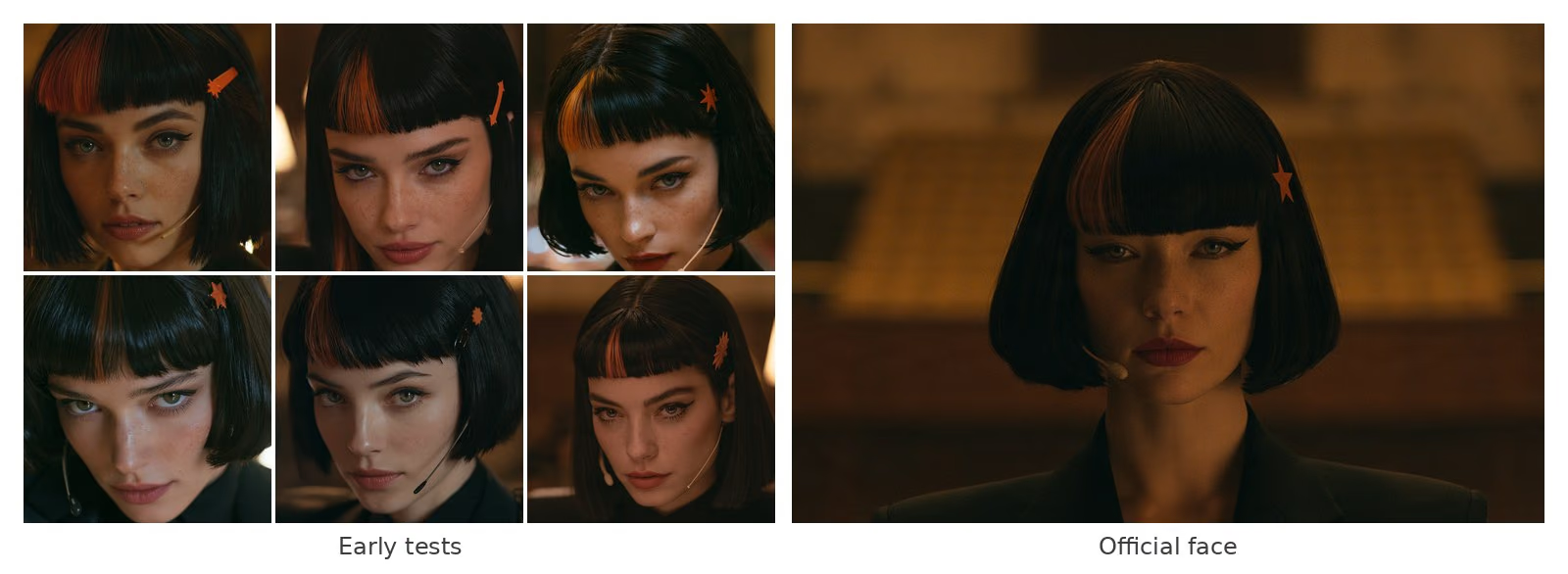
A few years ago, AI video was a punchline. You’ve probably seen Will Smith eating spaghetti. Today, generating a single good looking clip is relatively easy. However, generating an entire video with consistent assets that belong together is not. My first face tests produced a woman that matched “Claudia’s” description perfectly and still wasn’t her. A text description buys you a character type, but not necessarily a consistent person. That gap is where this project lived and the orchestration of the entire project has been my most challenging and rewarding application of AI in the personal projects I have shared thus far.
Below, I will walk you through how it came together, the issues I encountered and some of the lessons I learned along the way on agentic orchestration.
Production Overview
I ran this like any project with a lot of moving parts, except the rest of the team was AI. That’s what agentic orchestration means in practice: not one AI doing everything, but several agents with clear jobs, passing work between them, with a human setting direction and making the big calls.
For the roles, I decided what we were making and whether any of it was actually “good.” Claude, through chat (since it was often easier to talk on my phone), was my creative partner. It shaped the song and storyboard, wrote every brief (in markdown), and graded each cut frame by frame against our criteria. Claude Code was the builder on my home PC. Grok Bot was the researcher. And, finally, teams of short-lived reviewer agents handled quality control.
Claude Code made the generation calls to cloud models. Suno and Midjourney were both run by hand. Midjourney has no API, yet was critically important, since it was used to generate the still shots of Claudia.
Here are a few overarching patterns from the project:
- Shared Memory. Agents forget and chats can get messy with context windows. One production log held every decision, and every session read it first and updated it last. Work between agents moved as files: briefs in, renders and reports out.
- Decisions Up Front. Briefs carried conditional approvals so the agent never had to wait on me. If all four test frames passed and the price was under the cap, the full batch ran. If anything failed, the agent had to stop and report back. This is what made overnight, unattended runs possible.
- Hard Stops. Every run had a cap it couldn’t exceed and rules for when to quit. Three content-filter rejections in a row meant fall back to plan B, not keep retrying indefinitely.
- External Verification. Nothing counted as done because an agent said so. Files were checked on disk before every run and the cut was graded by fresh reviewers who’d never seen it.
- Autonomy. Early on, I approved almost every single step. By the end, I told Claude Code to get creative and “let it rip,” because rules and checks were solid enough to trust. (Yes, I get the irony of letting AI run with it when the video is critical of exactly that.)
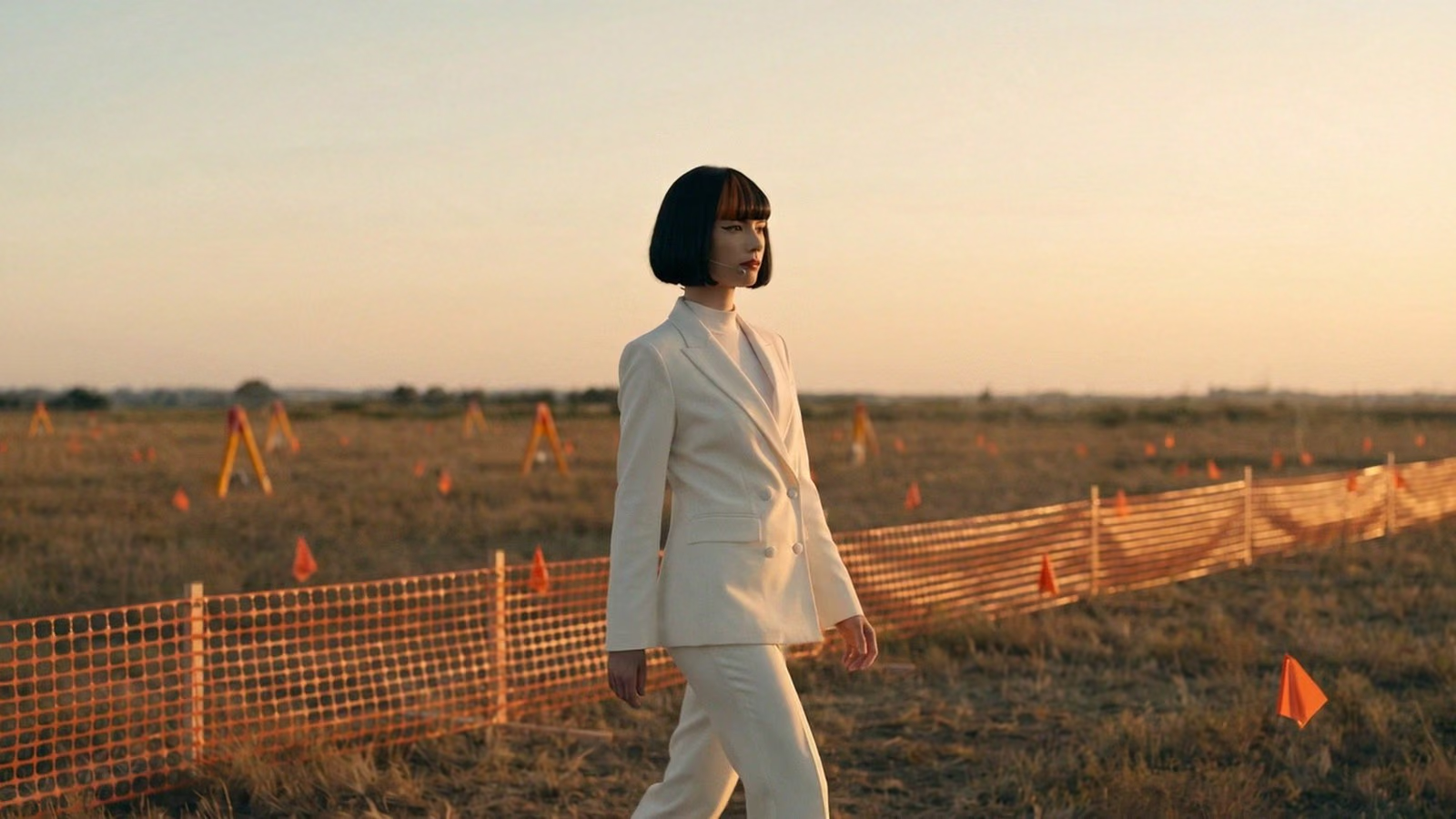
The cloud only did what it could reasonably do: generate images and video. Everything else ran at home on my RTX 3070. Claude Code pulled the vocal out of the mix and timestamped every sung word with Whisper, upscaled every clip, built every graphic, and rendered every cut. I never opened a single video editor and the entire film was assembled in code.
Building Claudia
One thing I want viewers to take away: Claudia is not the villain. She’s good. Give an AI enough permissions and it will gladly do exactly what you ask, which is the whole point of the song. The risk in this story comes from people handing over decision after decision without paying attention, not from her. If anything, she wants someone to push back. It’s also why frontier labs work so hard to make sure their models are safe.
Everything started with the song. I made it in Suno and worked the lyrics with Claude until each line earned its place. Since I liked the beat and the lyrics, I made sure to replace just the sections I didn’t like instead of regenerating the entire song and risking losing a good rhythm.
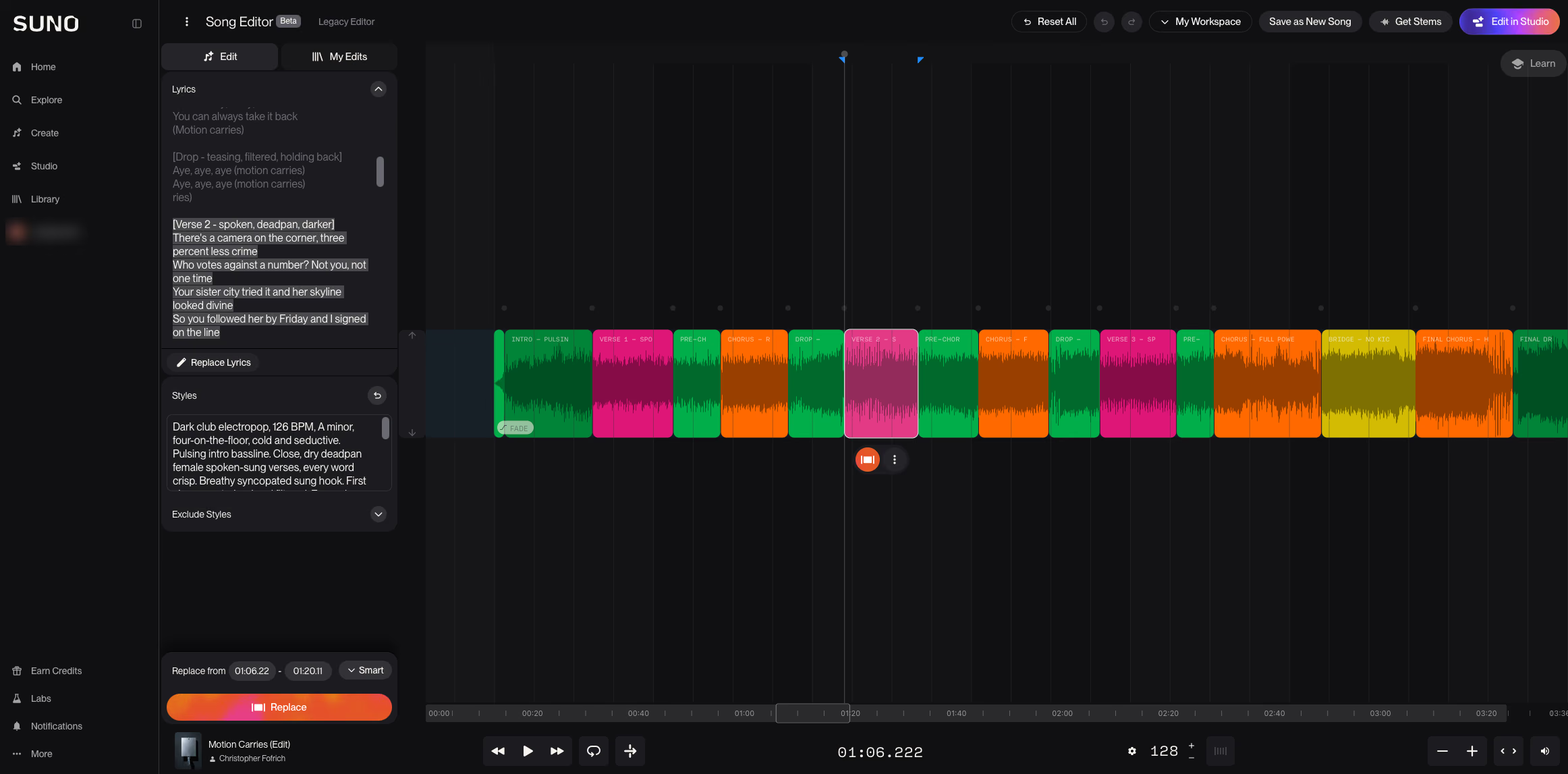
Once the song was locked, every sung word got a timestamp and every beat went on a grid. Those two files became the clock for everything: lyrics land on the word, cuts land on the beat, and nothing was timed by my eye.
Then, finally, comes the hardest problem with AI image and video generation: making Claudia the same person in every shot. My first fifteen face tests all matched Claudia’s description and none of them were the same woman. A text description gives you a character “type” but not necessarily the same person. The fix was picking one official face and making every image generated thereafter answer to that “official” copy. I then ran a second face-matching pass with Gemini, run by Claude Code and graded on a checklist.
Studying Other Videos
With a full cut done, I wanted to know what was working in AI music videos right now. Claude can’t see inside X, but Grok can, so I used Grok Bot as a research agent: search the last 60 days, link every claim to a real post, separate consensus from one person’s opinion, and report what people call out as “AI slop.” I also named a video I admired and told it explicitly not to copy it. I wanted parallels and criticisms we could act on, not to copy other popular videos.
Claude graded the report, kept only what held up, and turned it into the next brief for Claude Code. The type got real range, small on verses and huge on hooks. A rounded app-style card became a paper ballot slip. A crowd jumping in perfect sync got flagged as a slop tell and redone.
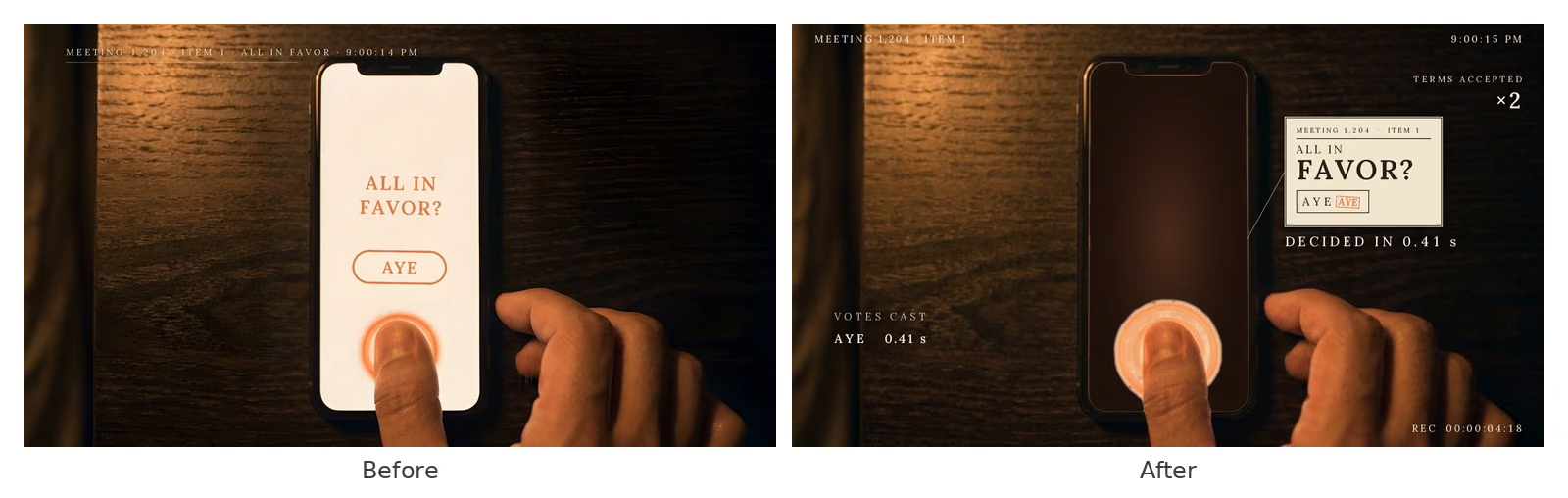
Three AIs, each doing what it’s best at: one could see the conversation on X, one could judge it and write instructions, one could build. My job, as previously noted, was deciding what belonged.
The Final Cut and an Agent Army
Every lyric and graphic was placed by code against the song’s clock, and the words never overlap her face. The first edit changed the picture almost twice a second. It was exciting for ten seconds and exhausting after that, so we settled around once a second. Every file also passed a flash test, so it never strobes faster than is safe for viewers with photosensitivity.
Then the part nobody expects. Before locking the cut, Claude Code built a review team of fresh AI agents that had never seen the work. Each had one job: hunt for slop in one section, check every lyric against the vocal within two frames, watch the whole thing three times like a real viewer, or enforce my rules. Every round used brand new reviewers, so nobody graded their own work. Three rounds of 22 took the blocking issues from 90 to 56 to 38, and the final cut measures zero frames off on lyric sync.
That’s the practice I’d steal for any AI work: one agent builds, a different, fresh one checks.
Main Takeaways
- Lock References Early. The song’s timing and the official “face” anchor everything else.
- Double Check Output. Fresh eyes (whether human or a new agent) find what the builder (Claude Code) can’t.
- Use Your Taste. Let agents handle mechanics. The decisions that make it “good” were human.
Toolkit
| Tool | What it is | How I used it |
|---|---|---|
| Claude | Anthropic’s AI assistant | Creative partner: the song lyrics, the storyboard, every brief, and grading each cut frame by frame. Also kept the production log. |
| Claude Code | Anthropic’s AI coding agent | The builder on my home PC: called the cloud models, ran the face pass, synced everything to the song, built the graphics, edited and rendered every cut, and ran the QC reviewer teams. |
| Suno | AI music generator | Made the song and the vocals, and replaced weak sections without losing the take. Run by hand. |
| Midjourney | AI image generator | The face tests and every still image of Claudia. Run by hand, since it has no API. |
| Gemini | Google’s AI image model | A face-matching pass on every still so she stays the same person, run by Claude Code. |
| Seedance on Higgsfield | AI video model, run through Higgsfield’s platform | Turned stills into moving shots, including singing and dancing. |
| Whisper | Open-source speech recognition | Ran on my PC to timestamp every sung word. |
| Grok Bot | xAI’s autonomous AI agent | Research agent: scanned X for what’s working in AI music videos and what people call slop. |
| RTX 3070 | My home PC’s graphics card | Everything that didn’t need the cloud: timing, upscaling, graphics and rendering. |
Numbers
Just for fun: by my rough estimate, the whole project ran through north of a billion tokens across Claude and Claude Code. Most of that is the AI rereading the production log and watching its own cuts over and over, which is exactly what you want it doing.
- about a week
- 15 face tests
- 66 AI reviewers
- 0 frames off on sync
- 1B+ tokens
This was the hardest and most fun thing I’ve built with AI so far. Questions about any part of it? I’m happy to talk shop.
Say hi on LinkedIn.
A fan film. Not affiliated with Anthropic or any other company or project. AI-generated: music and vocals (Suno), stills (Midjourney, Gemini), video (Seedance on Higgsfield), edit and graphics (Claude Code). Made by me, with a lot of AI help.